Understand first. Decide second.
Before Kisaya chooses exercises, sets or nutrition anchors, she needs to understand what the plan must do within your life. Your starting point is not judged. It is used to make better decisions.
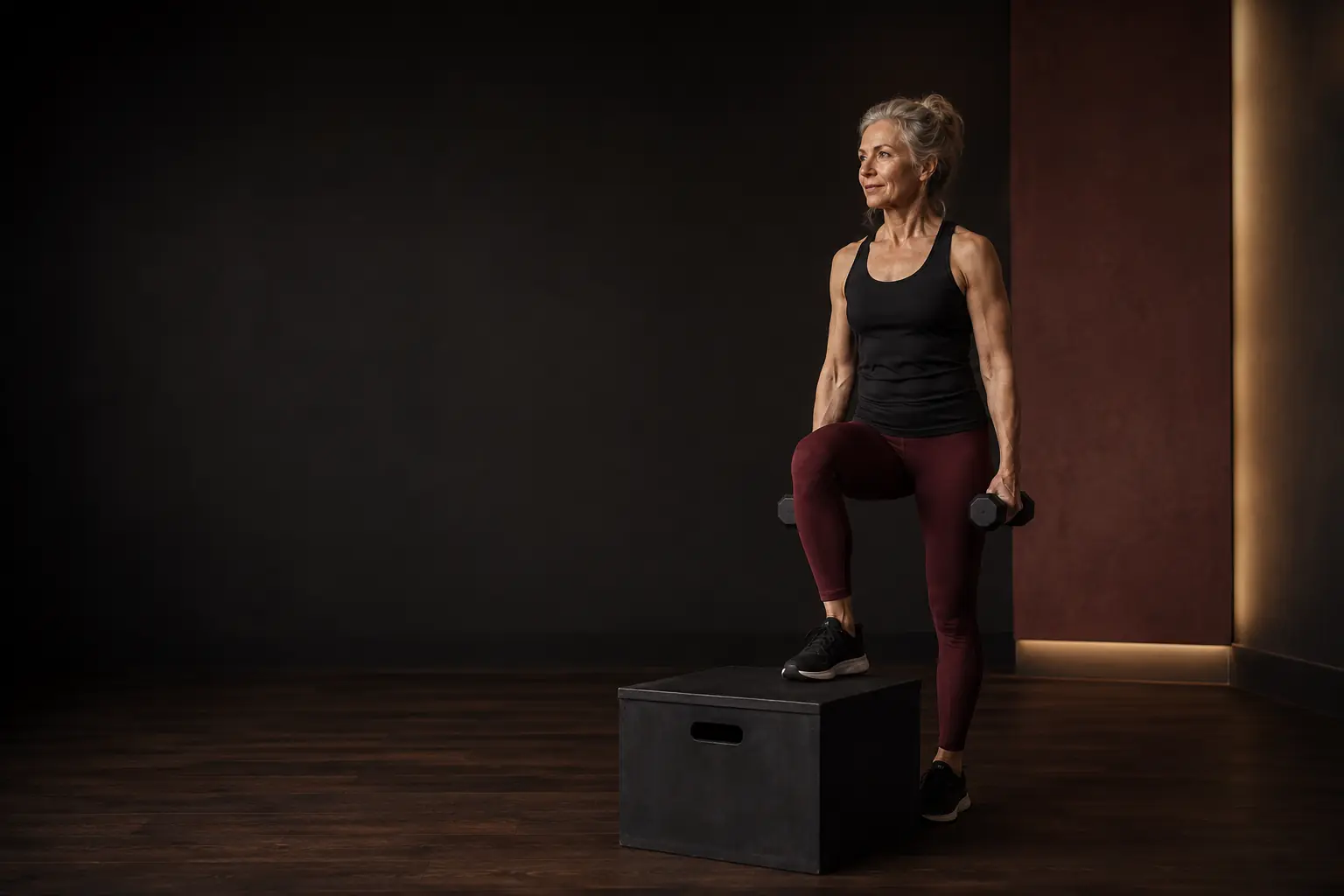
THE KISAYA METHOD
Your body changes. Your schedule changes. Your capacity, experience and goals continue to evolve. Your coaching is therefore not planned once and then merely completed. It is understood, built, trained, reviewed and adapted—again and again.
The short answer
The Kisaya Method connects six recurring steps: Understand, Build, Train, Nourish, Review and Adapt. Kisaya first explores the client's goal, starting point and real-life context, builds the training and nutrition structure, guides implementation personally and continues to adapt the plan using technique, feedback and progress.
WHY “PERSONALISED” MUST MEAN MORE THAN A QUESTIONNAIRE
Many plans are called individual because a few details are collected at the beginning. The plan then remains unchanged for weeks—even when exercises do not work, sessions become impossible or capacity develops differently than expected.
For Kisaya, personalisation begins with good questions. It does not end there.
A plan becomes personal when new information leads to a new decision. When a check-in is evaluated rather than merely collected. When training becomes not automatically harder, but more useful. And when a demanding week does not require the entire process to be abandoned.
The method is therefore not a linear six-step course. It is a loop.
THE SIX STEPS
Before Kisaya chooses exercises, sets or nutrition anchors, she needs to understand what the plan must do within your life. Your starting point is not judged. It is used to make better decisions.
Kisaya translates the starting point into a plan with priorities. Not everything that is theoretically possible needs to happen at once. A premium plan is not maximally complicated. It is as precise as necessary and as clear as possible.
Training means learning movement, developing strength and increasing load with purpose. Kisaya considers not only whether a session happened, but how it contributes to the overall development. Depending on the goal and context, strength training, controlled mobility and selected elements from Pilates or yoga may work together. Selection follows function, not fashion. Technique feedback, perceived load and agreed progress criteria help determine the next step.
Nutrition guidance supports the training goal while respecting preferences, schedule and practicality. This is not medical nutrition advice or therapy. Clinical needs are referred to appropriately qualified professionals.
The weekly check-in connects the plan with reality. It shows more than whether something was completed; it helps explain why the week unfolded as it did. Not every available number needs to be measured. The useful measures are those that improve the next decision.
The review leads to a decision. Then the loop begins again: understand, build, train, nourish, review and adapt.
UNDERSTAND
The assessment explores:
BUILD
The structure answers:
NOURISH
Instead of declaring one approach universally correct, Kisaya works with understandable anchors such as:
REVIEW
Depending on the goal, Kisaya may review:
ADAPT
The review leads to a decision:
A REAL-LIFE EXAMPLE
A client normally plans three sessions per week. During a travel week, however, she has only a hotel room, limited equipment and two short time windows.
A rigid plan creates three missed sessions. The Kisaya Method asks different questions:
The week does not become worthless because it looks different. It receives a different, clear purpose.

WHAT PROGRESS CAN MEAN
Progress is defined in relation to the goal. Possible criteria include:
Not every client follows the same criteria. That is exactly why the method begins with Understand.
PERSONAL DOES NOT MEAN UNLIMITED
High-touch coaching needs closeness and clear agreements.
Before you begin, the following are made transparent:
Clarity protects more than Kisaya's capacity. It makes the support reliable for the client.

KISAYA PRIVATE — For women who want strength, shape and accountability with maximum personal guidance.
RETURN TO STRENGTH — For mothers who have appropriate clearance and want to rebuild strength, resilience and body confidence through fitness-oriented coaching.
RIDER PERFORMANCE — For ambitious riders who want to support stability, mobility, strength and repeatable quality in the saddle.
FAQ
The plan is built from the client's starting point, goal and available context. Proven training principles may recur, but exercise selection, dose, progression and adaptation are determined personally.
Not according to an artificial change schedule, but when feedback, progress or life circumstances make a better decision possible. Weekly check-ins provide the regular review point.
Only information relevant to the goal, training, practical context and safe scope is needed initially. Sensitive health information does not belong in a public lead form and, where necessary, should be handled through a secure onboarding process.
The Kisaya Method is Kisaya's coaching and adaptation system, not a clinically validated treatment protocol. It uses established training principles, personal coaching experience and a structured feedback loop without making an unsupported scientific claim.
Future digital programmes will make selected principles available in a self-guided format. Continuous personal adaptation remains the defining feature of KISAYA PRIVATE.
Next step
Your life does not need to become quieter before your training can become clearer.
Continue