KISAYA REPORT
Return to Strength — A structured return to strength and body confidence
An orientation and conversation framework for a fitness-oriented return
Fully readable · No email required · No PDF needed
A responsible return begins with professional clearance and context, not intensity. Movement patterns and strength are rebuilt step by step, fitted around caregiving and disrupted sleep, with nutrition free of perfectionism. Persistent symptoms always belong with a qualified professional, not in a training program.
This report is an orientation and conversation framework for a fitness-oriented return to strength after birth — explicitly not a therapy protocol and not a substitute for medical or physiotherapeutic care.
Context before intensity
The wish to "feel like yourself again" after giving birth is understandable and often very present. Precisely because of that, a responsible return does not start with a training plan — it starts with context: how the birth went, what professional feedback already exists, and what sleep, feeding, and daily load currently look like.
This context sets the pace, not a generic weekly plan from the internet. Two people with the same due date can have entirely different starting points — and correspondingly different, equally correct timelines for returning to training.
This report does not replace a conversation with a doctor or physiotherapist. It helps you ask the right questions before intensity even becomes a topic.
Questions about readiness and professional clearance
Before any targeted training resumes, clearance from the treating doctor or midwife comes first. This clearance is not a formality — it is the foundation everything else is built on.
Useful questions for yourself and your care team concern healing progress, any diastasis recti, pelvic floor status, and your current everyday capacity. These should be answered before a training plan gets concrete.
- Has a doctor or midwife cleared you for physical activity?
- How has wound healing progressed since birth?
- Have any pelvic floor or abdominal concerns been professionally assessed?
- What is your current everyday capacity, independent of training?
Rebuilding movement patterns and strength step by step
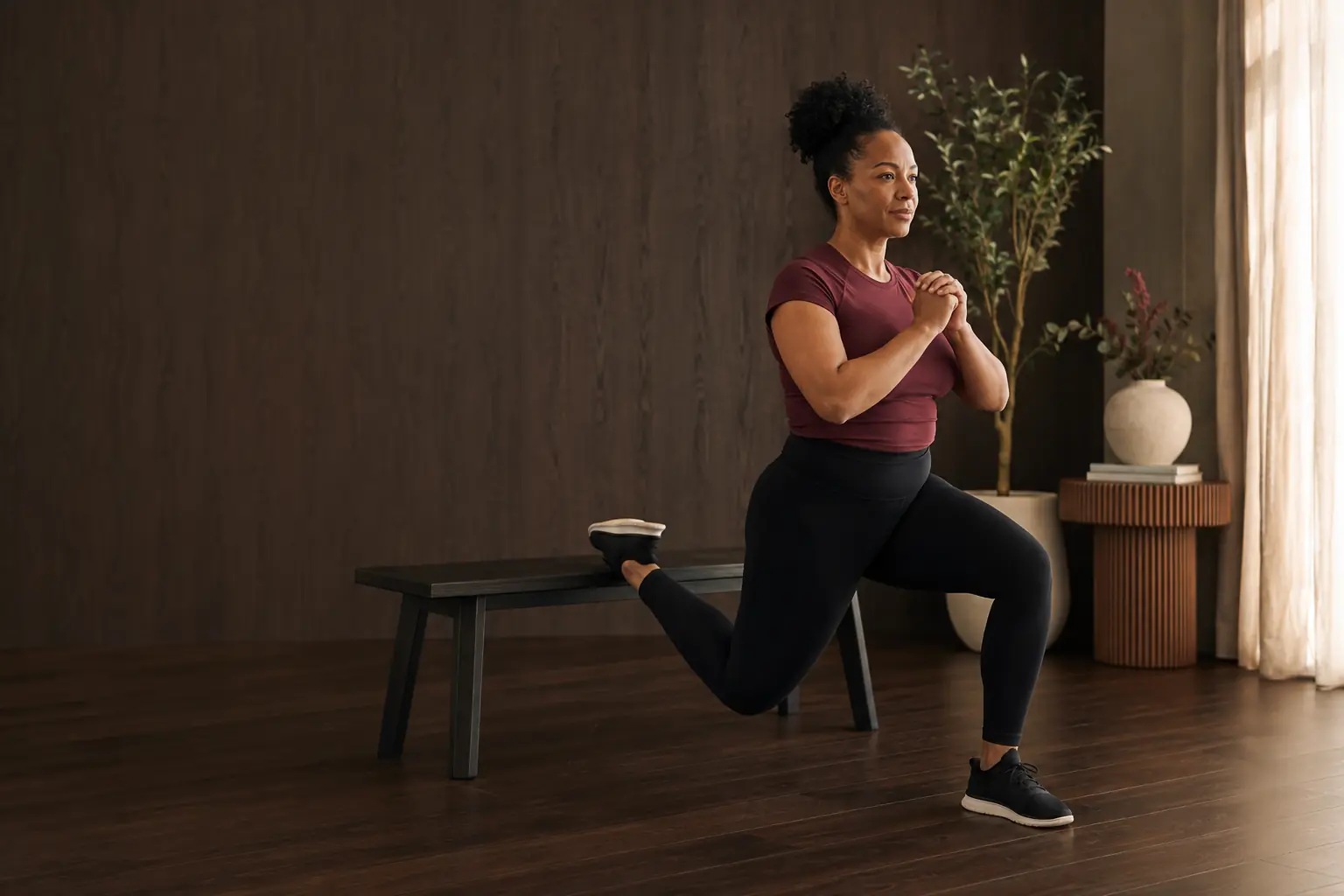
Once cleared, rebuilding usually starts with breathing, gentle trunk activation, and everyday movements like standing up, carrying, and bending, before targeted strength work is added. This step-by-step build is not caution without substance — it is the foundation for durable progress.
Only once this base feels stable do carefully progressed loads in the foundational patterns follow. Pace and sequence depend on individual feedback, not a fixed calendar.
Planning around care work and sleep
Realistic planning in this phase means building training around caregiving and disrupted sleep, not fighting against them. Short, flexible sessions that can be moved or shortened are more effective than a rigid plan that collapses after the first sleepless night.
Planning with little sleep also means planning with reduced capacity. That is not a step backward — it is adapted reality, and part of what makes a return sustainable rather than short-lived.
Nutrition and recovery without pressure to be perfect
Nutrition in this phase follows the same flexible orientation as any other life stage: enough energy and protein, adapted to feeding and daily life, without strict dietary rules. This report offers no medical nutrition recommendation and does not replace individual counseling, particularly with specific health considerations.
Recovery here mostly means keeping expectations of your own healing capacity realistic. Sleep deprivation and hormonal change objectively slow recovery — accounting for that in training planning is care, not compromise.
The questions a good coach should ask
Responsible coaching in this phase is recognizable by which questions come first. A good coach asks about professional clearance, the birth itself, pelvic floor and abdominal status, sleep, and everyday load — and adjusts the training to the answers, not the other way around.
Equally important is the willingness to refer out to qualified professionals when a question falls outside their own scope. Knowing and respecting that boundary is a mark of quality, not a shortcoming.
Red flags and professional boundaries
Certain signs belong immediately with a qualified professional, not in a training program: pain, a feeling of heaviness or pressure in the pelvic area, involuntary leaking, a visible bulge along the midline of the abdomen, or persistent instability.
This report is fitness-oriented and does not replace medical, physiotherapeutic, or therapeutic advice. Nothing here replaces individual professional clearance. If any of these signs appear, the next step always belongs with an appropriately qualified professional — not a training plan.
- Pain during or after activity
- Pressure or heaviness in the pelvic area
- Involuntary leaking
- A visible bulge along the abdominal midline
- Persistent instability or uncertainty during movement
A flexible first structure
Once cleared, a deliberately flexible first structure might consist of two short sessions a week combining breathing, gentle trunk work, and foundational movements, along with everyday movement like walking. This is a starting point, not a fixed program, and it keeps adapting to feedback and daily life.
A promise of a fast recovery or "your old body back" has no place in a responsible approach. Progress in this phase is individual, not linear, and is best shaped alongside qualified professional guidance.
Sources
- Physical Activity and Exercise During Pregnancy and the Postpartum PeriodAmerican College of Obstetricians and Gynecologists · official guidance · accessed 16 August 2026
- Keeping fit and healthy with a babyNHS · official guidance · accessed 16 August 2026
- Advice and exercise following childbirthUniversity College London Hospitals · official guidance · accessed 16 August 2026
Methodology
This report has been mirrored against the official guidance listed above and does not constitute an individual recommendation.
Next step
The next step starts with a conversation, not a plan
The Motherhood Fit-Check is the right first step to clarify readiness, context, and a realistic framework together.
A non-binding application. No purchase and no payment obligation.